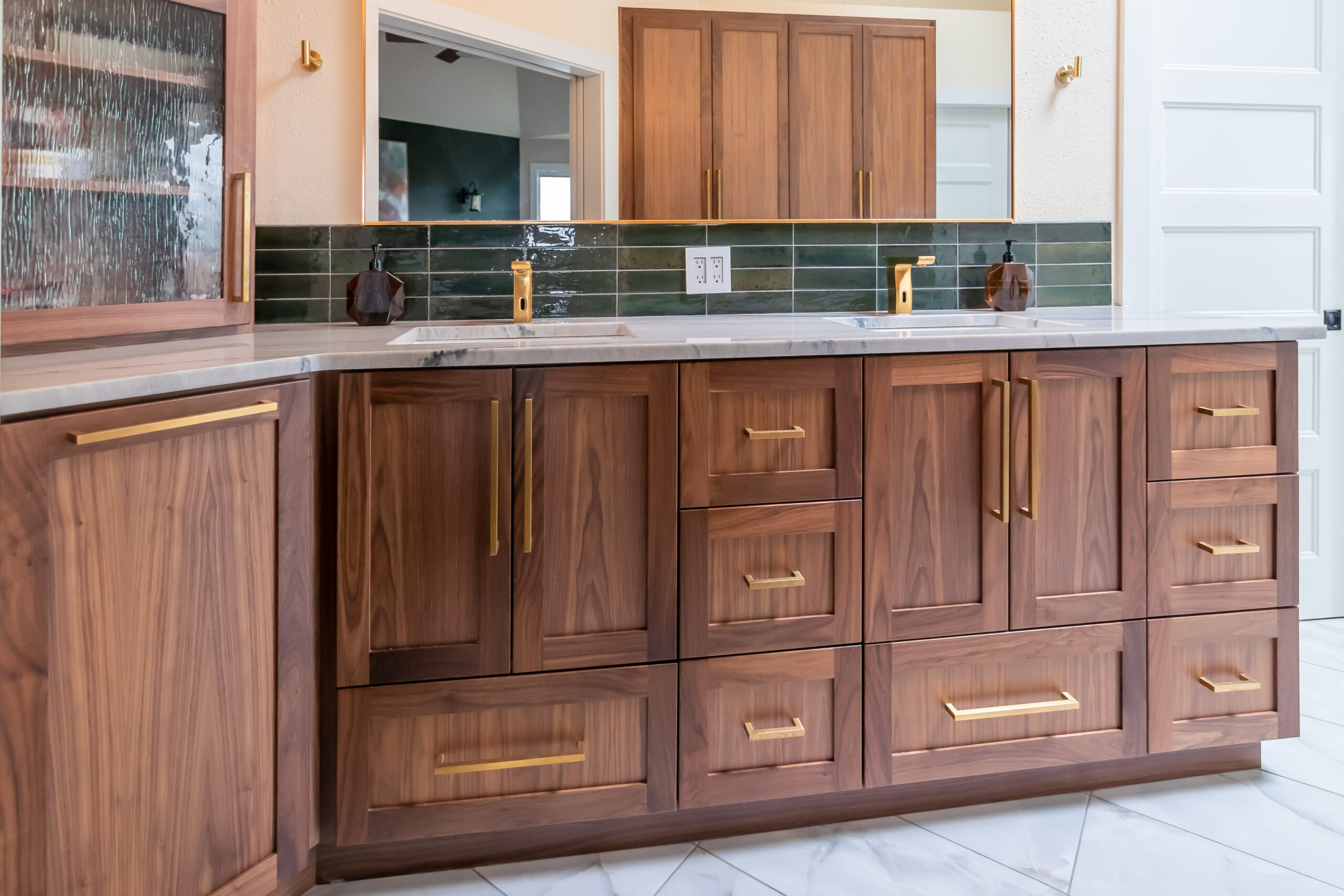
Walnut has a reputation for a reason. It is a top choice in high-end renovations and was one of the most requested materials at ARKA in 2025, even surpassing rift-sawn white oak. Walnut cabinets bring depth, warmth, and a very distinct character to a space. But walnut is not a neutral material. The grain is strong and expressive, and it will influence the final design more than most people expect.
Walnut Is Not a Background Material
Compared to woods with a softer and more uniform grain, walnut does the opposite. It draws attention. The grain is active, the color is rich, and every panel becomes part of the overall composition.
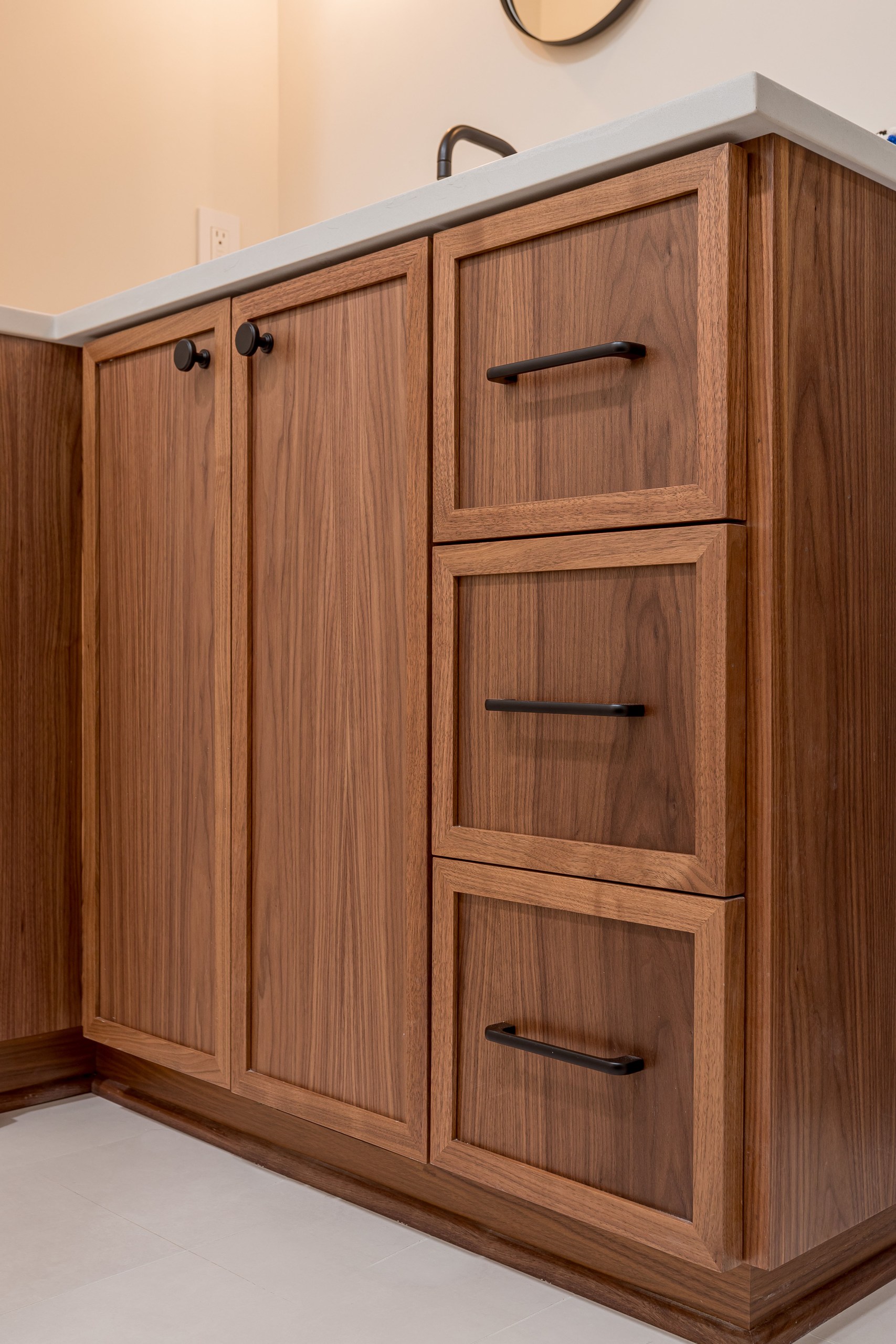
That is why walnut cabinets need to be handled with more care. It is not only about grain matching across doors and drawer fronts, but also about which parts of the material are selected and used in the first place.


What Is Sapwood
One of the biggest factors that affects how walnut cabinets turn out is something most homeowners have never heard of: sapwood.
Sapwood is the outer portion of the tree, just beneath the bark. It is the part that was actively transporting water when the tree was alive. In walnut, sapwood is much lighter than the inner heartwood, often appearing as pale or almost white areas within a board. In finished cabinetry, this shows up as noticeable light patches.
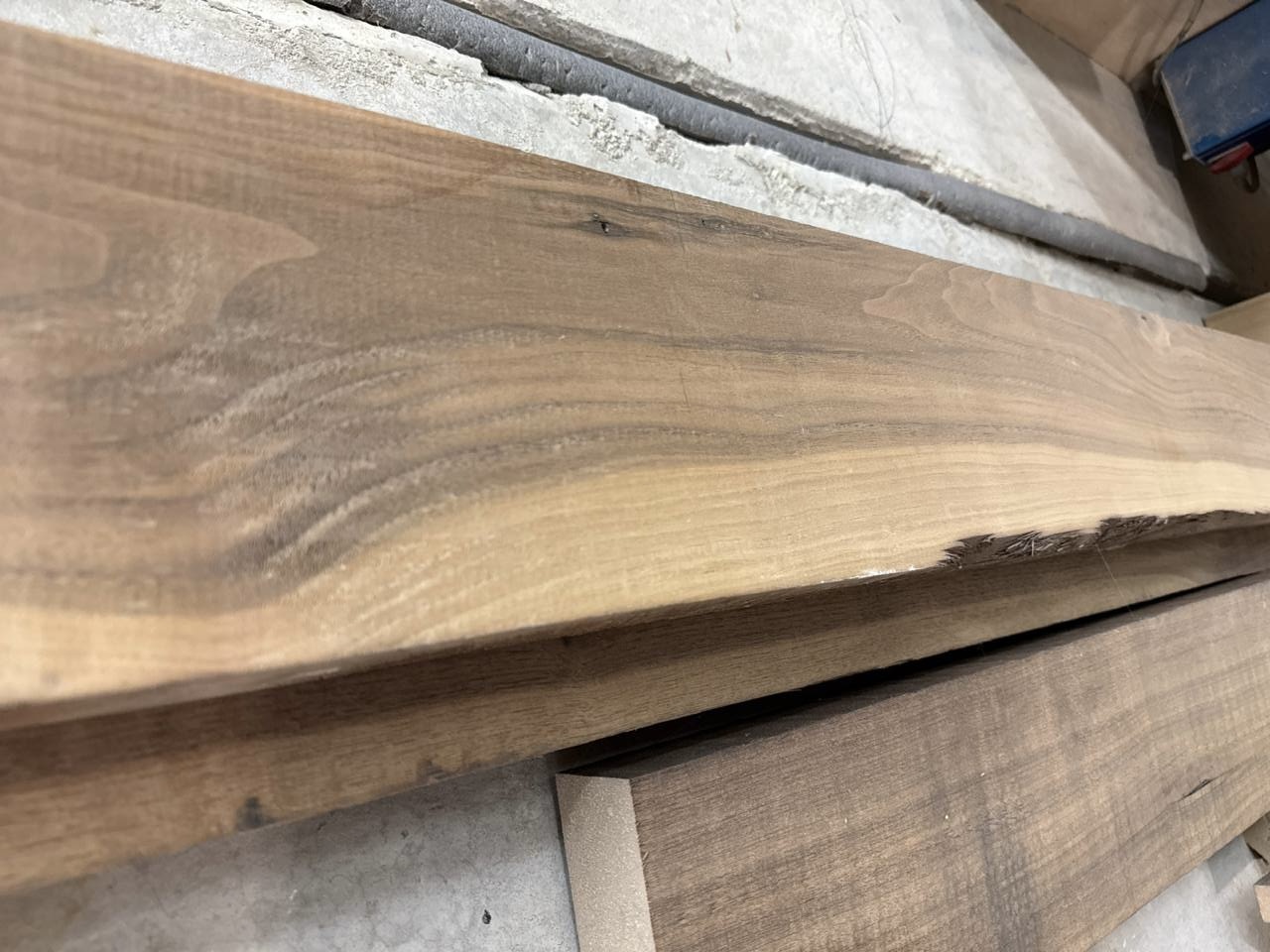
Sapwood exists in other hardwoods as well, including maple and oak. Most homeowners choose walnut cabinets for their deep brown tone, and sapwood interrupts that look with lighter areas that make the grain appear even busier. The contrast is striking. Areas of sapwood appear as pale, almost cream-colored streaks running through the deep brown of the heartwood. In a finished cabinet door, that lighter zone reads as an inconsistency rather than a natural variation, which is why we remove it from all visible surfaces.
Where the Difference Shows
This is where the gap between premium cabinetry and average work becomes obvious.
At ARKA, we select and cut material to maintain a consistent tone across the entire project and remove sapwood during production. The result is walnut cabinets without those light patches in doors or exposed panels.
This approach requires more material and more time in the shop, but it gives us a clean and consistent look.
Not every shop works this way.
Sapwood is often left in to maximize yield from each board. Less waste means lower material cost, which is why lower bids on walnut cabinets can look very different in the end. Those light patches do not disappear after installation. They become part of the design, and many homeowners only realize it once the project is complete, unless they were intentionally going for a more rustic look. Just imagine how disappointing it is.
Why Walnut Cabinets Vary So Much in Price
This is one of the main reasons you may see a wide range of pricing for walnut cabinets.
Walnut itself is already an expensive material. It grows more slowly, is less available, and requires careful handling during milling and finishing. When you add proper material selection on top of that, the cost increases, but so does the quality and consistency of the final result.
What You Should Ask Before You Commit
If you are comparing quotes for walnut cabinets, ask the right questions.
Ask how the material is being selected. Ask to see a full door sample, not just a small chip. Look at completed projects and pay attention to consistency across the cabinetry.
You are paying for a premium material and should expect a premium result. If you do not confirm how sapwood is handled, you may end up with a final look that does not match your expectations, with no way to change it after installation. If consistency across the grain is a priority for you, engineered material is also worth considering. We cover that topic in depth in our post on Natural Wood vs Engineered Cabinets.