If you’re planning a kitchen remodel or custom cabinetry project, you’ve probably come across terms like face frame, Eurostyle (frameless), or inset cabinets. But what do they actually mean — and why does it matter for your design?
We believe that when you understand your options, you can make smarter, more confident choices. Let’s break down the basics of cabinet construction.
Every cabinet has two main parts:
the cabinet box (casework) — which defines durability and structure,
and the doors and drawers — which define the visual style.
The way that box is built, whether it includes a face frame or not, determines how your cabinets look, how they function, and how much usable space you get.

What Is a Face Frame Cabinet?
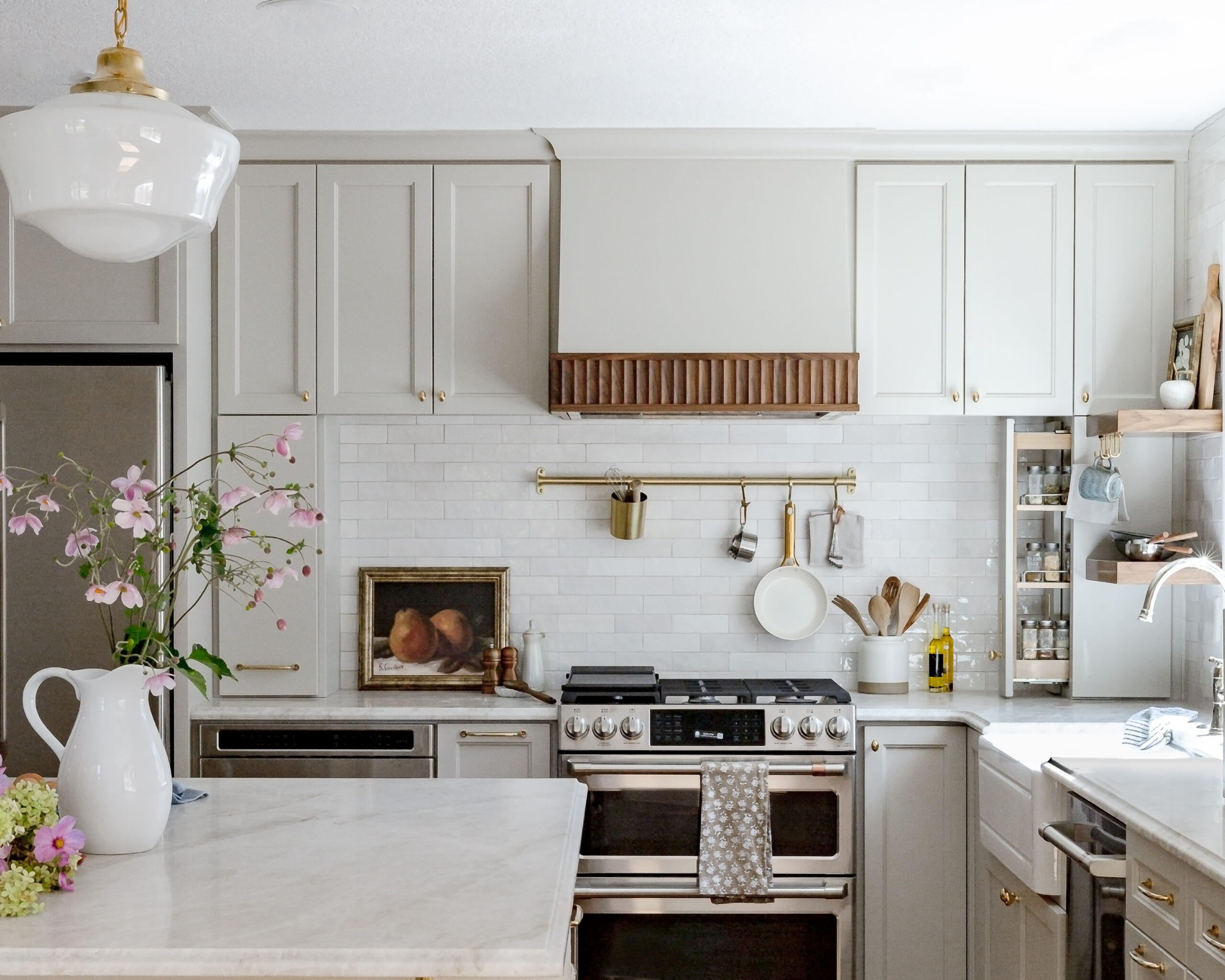
Face frame cabinets — sometimes called traditional American cabinets — have a solid wood frame attached to the front of the cabinet box. This frame acts like a structural border around the opening, and doors and drawers are mounted to it.
Historically, the face frame added strength and stability to the cabinet. Today, it serves both a structural and decorative purpose.
Face frame cabinets can be configured in three ways:
- Inset
- Full overlay
- Partial overlay
Inset Cabinets:
Inset doors sit flush inside the face frame, creating a smooth, furniture-like appearance. This style requires the highest level of precision and craftsmanship, making it the most expensive type of cabinet construction. It’s often found in luxury kitchens and high-end remodels. One functional trade-off to consider is that inset construction slightly reduces the usable opening inside the cabinet, since the doors and drawers sit within the frame rather than over it.

Full Overlay Cabinets:
Full overlay doors lay over the face of the cabinet frame, covering nearly all of it. This creates a cleaner, more continuous surface while still using traditional construction.
It’s one of the most popular choices for transitional kitchens.

Partial Overlay Cabinets:
Partial overlay doors cover only a portion of the face frame, leaving much of the frame visible.
This style was once standard in American cabinetry but is now largely associated with older homes or builder-grade construction, and is rarely used in modern custom cabinetry.

Design Notes:
Face frame cabinets are commonly used in classic, farmhouse, and transitional kitchens because they introduce visible structure and detail to the space.
The frame creates subtle lines between doors and drawers, which adds depth and definition. Instead of one continuous flat surface, you get a more layered look — similar to furniture pieces that have rails, stiles, and framing around panels.
This works especially well in homes where:
- You want the kitchen to feel warm and timeless rather than sleek and minimal
- There are other traditional elements, like crown molding, paneled walls, or detailed trim
- You want to add visual structure and character
What Are Frameless (Eurostyle) Cabinets?
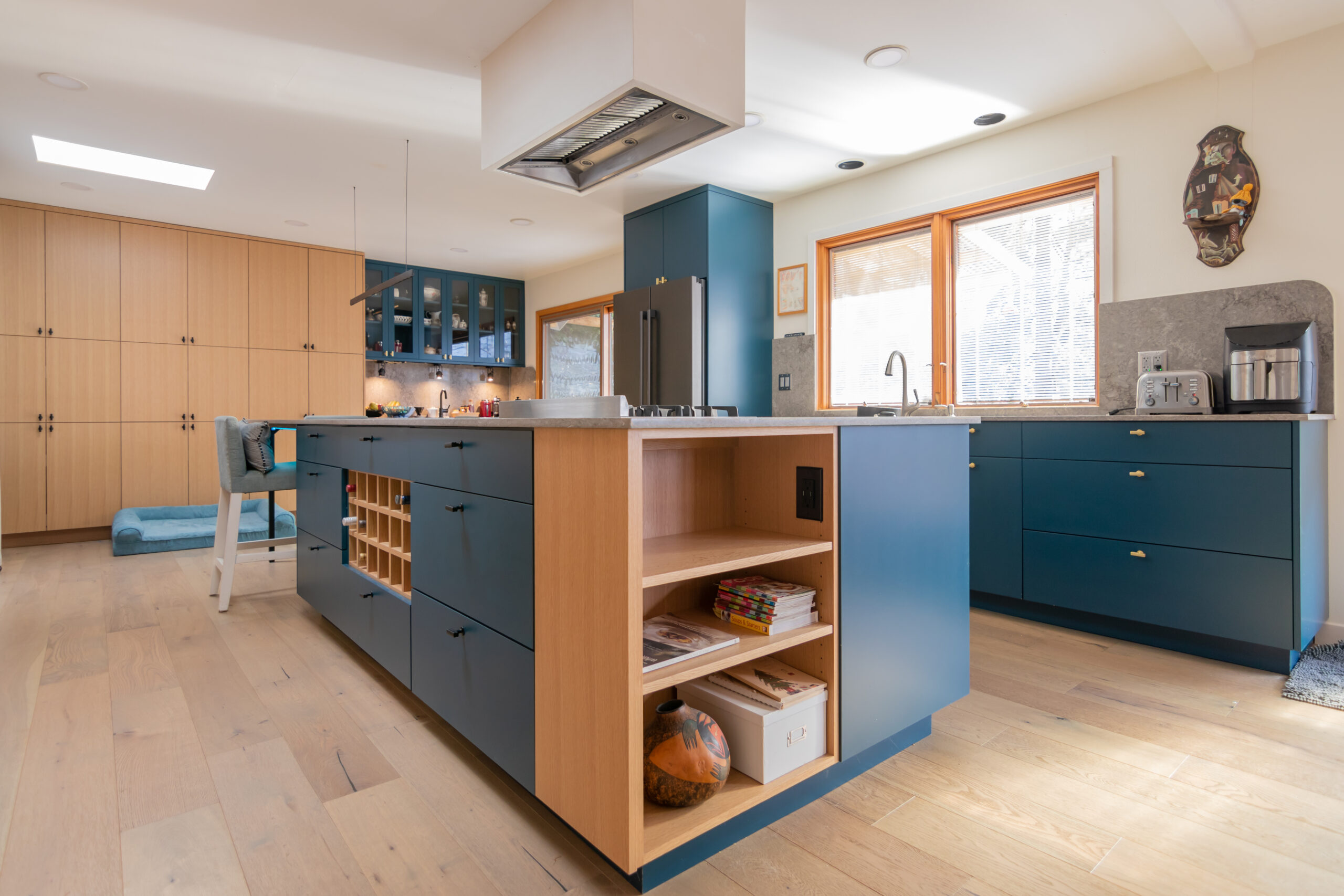
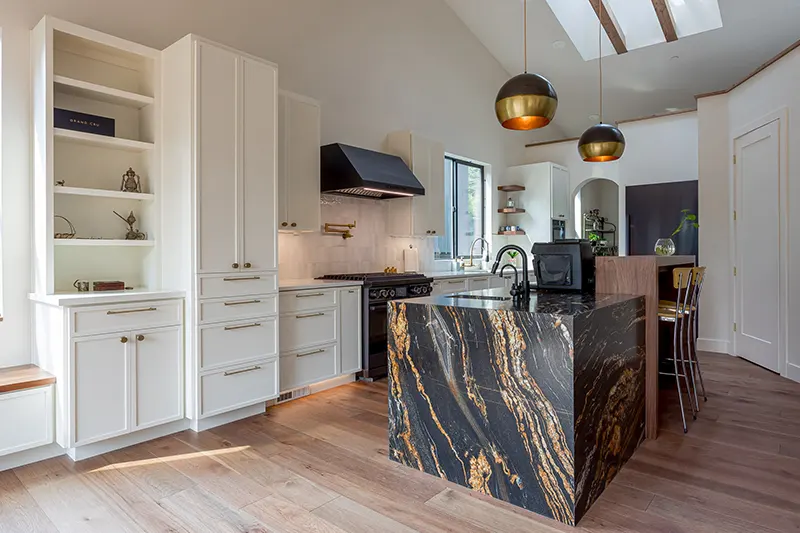
Frameless cabinets — also known as Eurostyle cabinets — eliminate the front face frame entirely. Instead, doors and drawers are mounted directly to the cabinet. This results in a cleaner, more streamlined appearance with minimal gaps between doors and drawers. This construction also allows full access to the cabinet opening, since there is no frame reducing the usable width.
Despite the name, “Eurostyle” refers to the construction method, not where the cabinets are made — though this approach originated in Europe and remains the standard for most European manufacturers.
Benefits of Frameless Cabinets:
- Clean, modern look — ideal for contemporary or minimalist designs
- Maximized storage space inside the cabinet
- Consistent, tight lines between doors and drawers for a seamless aesthetic
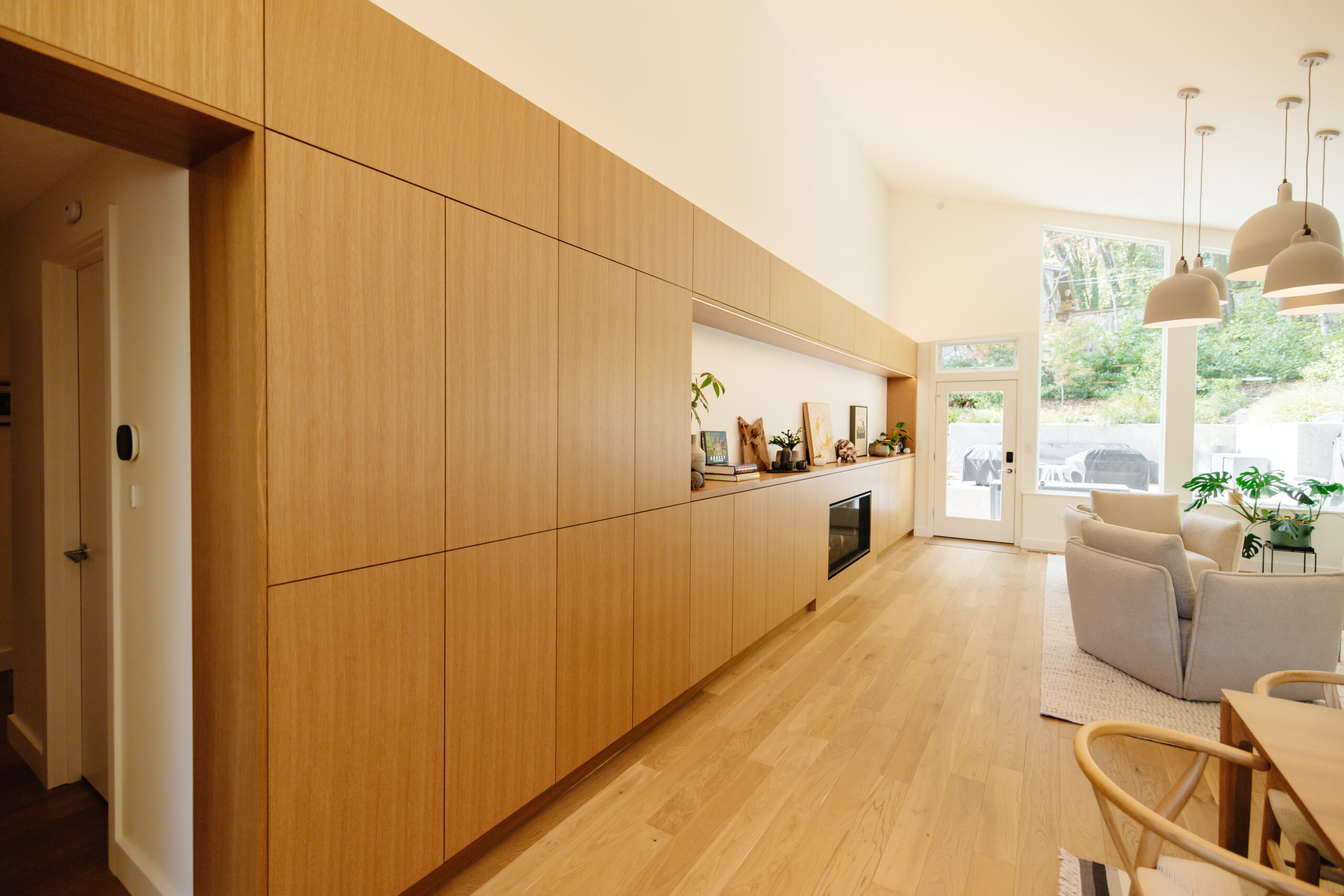
Design Notes:
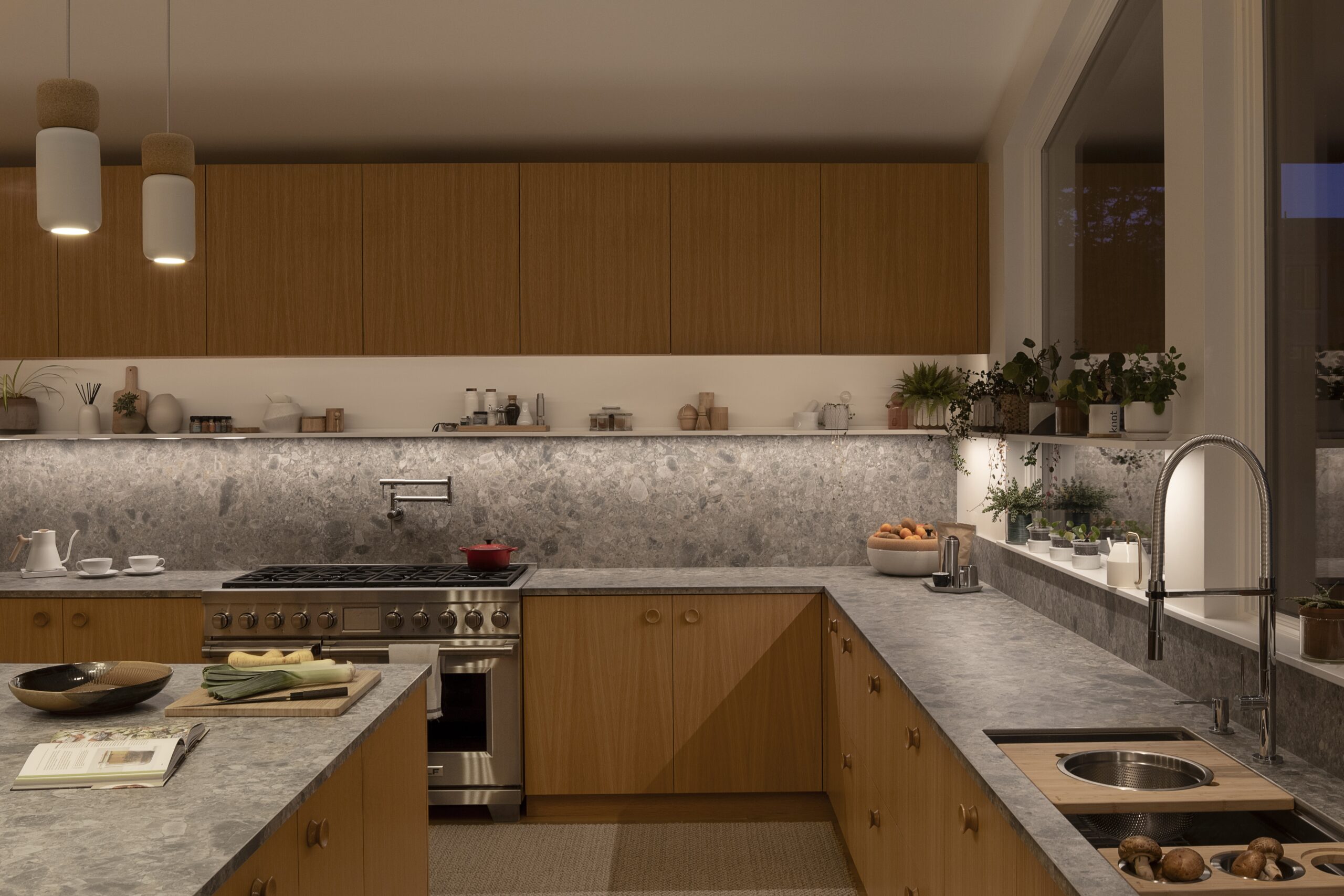
Frameless cabinets are a go-to choice for modern kitchens, Scandinavian-inspired spaces, and anyone who loves a clean, uncluttered look. Instead of decorative details, the focus is on proportion, natural materials, and clean lines. The cabinetry doesn’t compete for attention; it becomes part of the architecture, allowing elements like wood grain, light, and texture to take the lead.
Which Style Is Right for You?
When choosing between face frame and frameless (Euro) cabinets, consider:
Your design vision: Do you love traditional details or clean modern lines?
Your storage needs: Frameless cabinets give you a bit more usable space inside each cabinet.
Your home’s architecture: A historic home might suit face frame cabinets beautifully, while a new build could lean modern with frameless designs.
Your lifestyle: If easy cleaning and maximum function are key, frameless cabinets often win points for simplicity.
Not sure how to choose the right style of cabinets? Consider working with a professional interior designer. We covered all the benefits of working with a pro, and how it can save you time and money, in our previous blog post. And don’t forget, ARKA offers design services in-house to make the process even easier.
ARKA Cabinets: We build both Face Frame and Frameless Cabinets
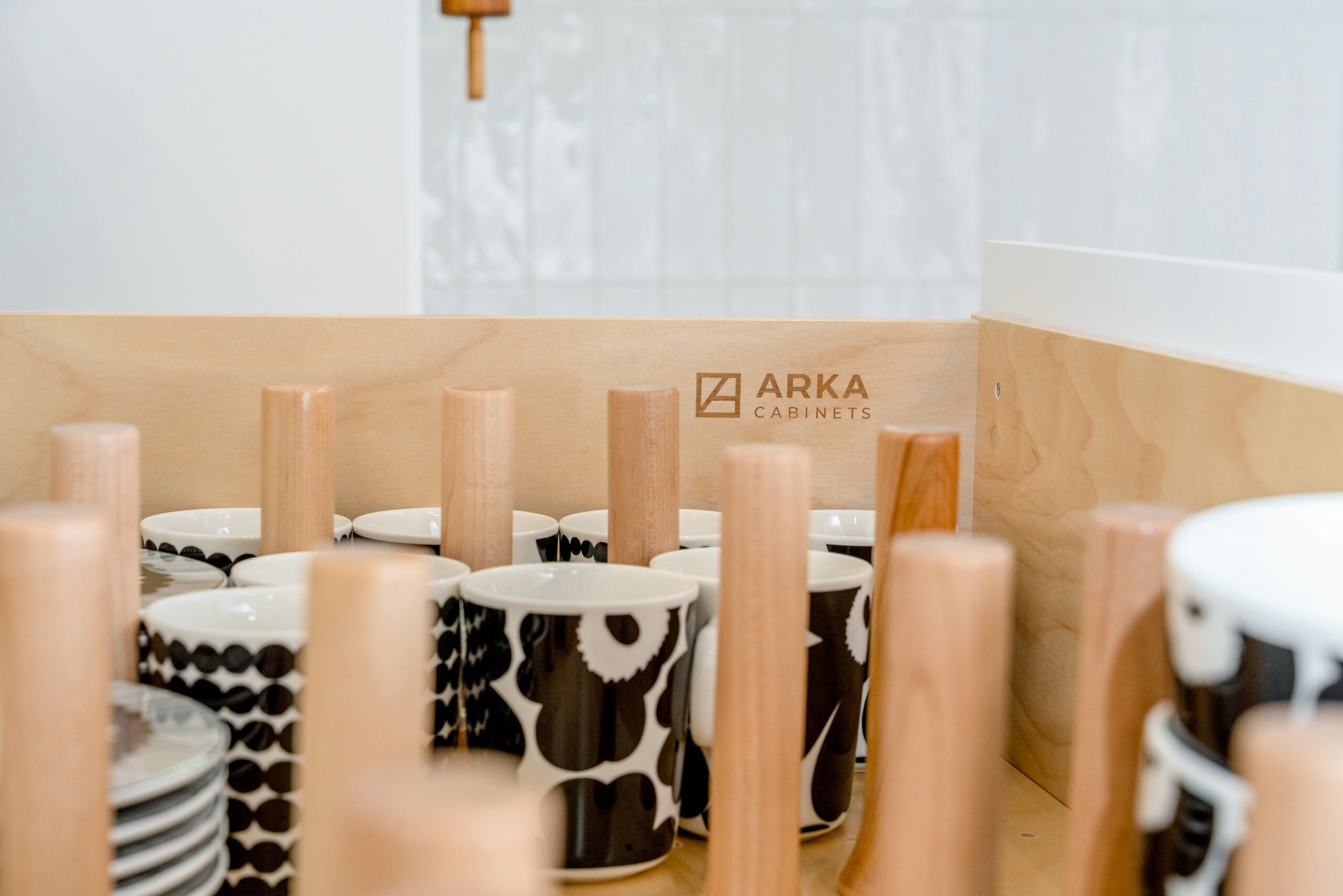
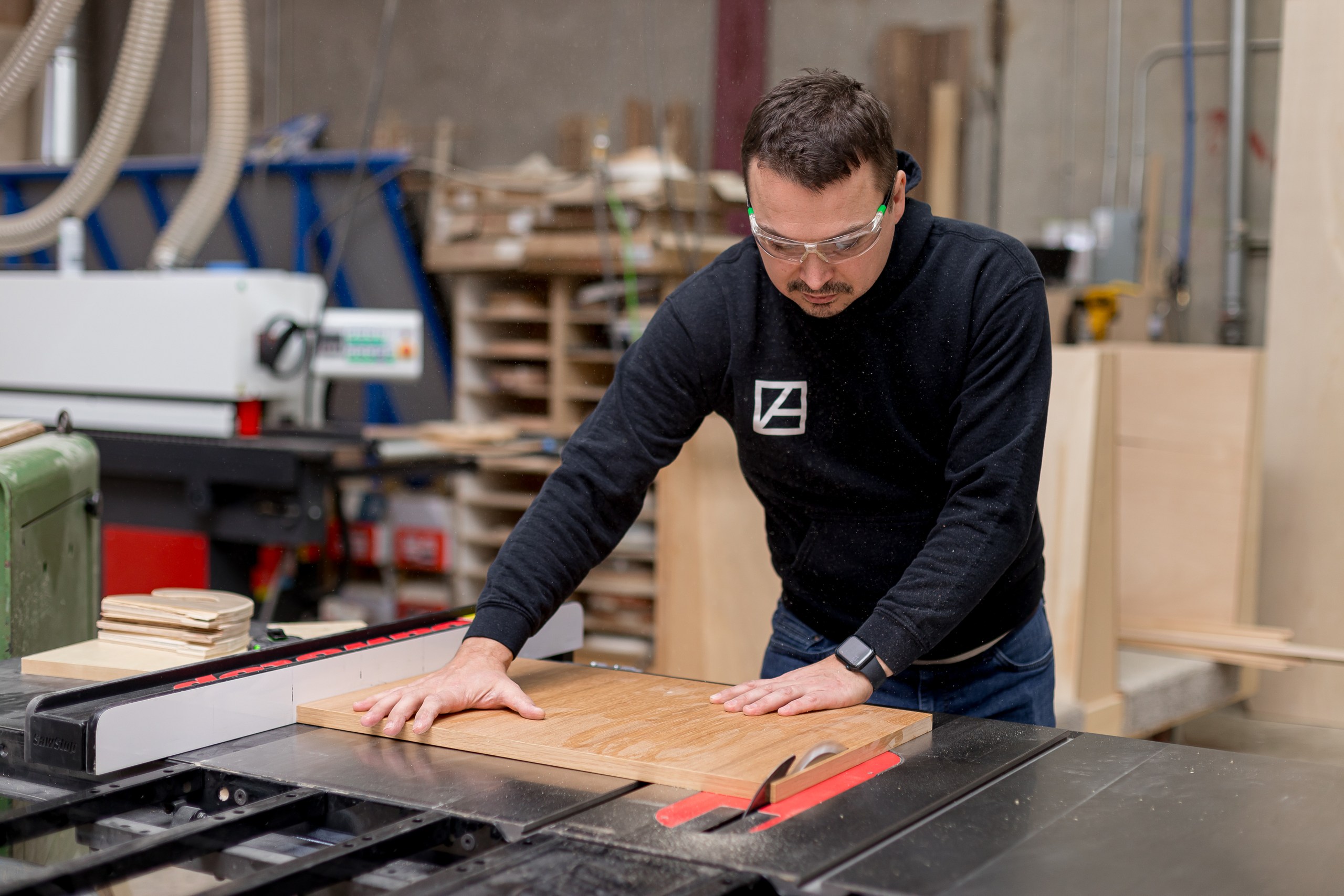
At ARKA Cabinets, we specialize in both cabinet construction methods, giving you true freedom in your design. Our expert team builds face frame cabinets, frameless Eurostyle cabinets, and every door configuration — full overlay, inset, and beyond. You aren’t limited by what we can produce — we fabricate every cabinet in-house using premium materials and proven techniques. We have the tools, knowledge and expertise to build cabinets that will last decades. Let’s start the conversation about building cabinets that are made to match your space, your taste, and your life.
Ready to explore your options?
Request a design consultation or visit our showroom to see both cabinet styles up close.